When homes are decorated solely with synthetic composites, flat polymers, or artificial faux-finishes, they age poorly. Synthetic materials scratch, peel, and look tired after minimal wear. In contrast, genuine organic materials—European oak, unbleached linen, raw terracotta, and mouth-blown glass—possess an inherent integrity: they patina, soften, and grow more beautiful as the years pass.
The secret to combining natural materials without creating visual chaos lies in understanding each material’s sensory role: density, light absorption, and tactile texture.
1. Solid Timber as the Structural Anchor
Wood supplies visual temperature. In Northern Europe, where winter daylight is cool and overcast, solid European oak finished with clear, natural hardwax oils introduces golden honey warmth into rooms without requiring artificial yellow wall paint.
- Grain Uniformity: Let one wood tone dominate 70% of the room (e.g. natural or smoked oak) before introducing secondary timber accents.
- Matte Oil vs. Gloss Lacquer: Always choose open-pore matte oil finishes. They preserve the natural breathing pore structure of the wood and feel warm to the palm.
“Nature never makes a color mistake. When you stay true to unprocessed fibers, woods, and minerals, every element naturally belongs together.”
2. Unglazed Clay to Absorb Harsh Glare
While glass and metal bounce direct sunlight across a room, unglazed ceramic surfaces gently absorb and diffuse light. Placing terracotta vessels or stoneware lamps near window sills softens midday glare and creates a rich, painterly gradient across corners.
3. Washed Flax Linen for Acoustic Softness
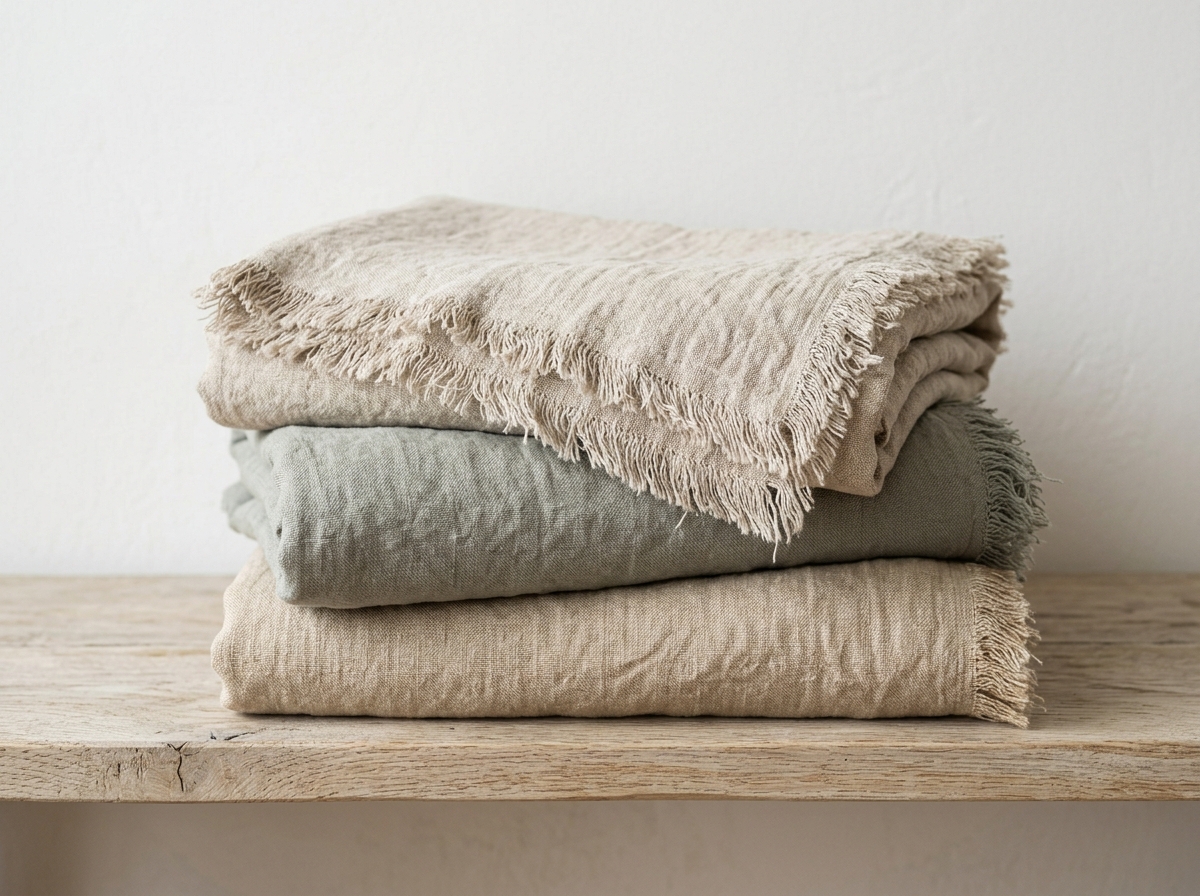
Hard surfaces require textile balance. Pure Belgian flax cushions and throws provide gentle slubs and soft wrinkles that signal informality. They prevent architectural spaces from feeling like pristine, untouchable museum galleries.
Why do natural materials age better than synthetic ones in home decor?
Genuine organic materials, such as European oak and unbleached linen, possess an inherent integrity that allows them to patina, soften, and grow more beautiful as the years pass. In contrast, synthetic materials tend to scratch, peel, and look tired after minimal wear.
What is the secret to combining natural materials without creating visual chaos?
The secret is to understand each material's specific sensory role, particularly its density, light absorption, and tactile texture.
How should different wood tones be balanced within a room?
You should allow one dominant wood tone, such as natural or smoked oak, to make up 70% of the room before you introduce any secondary timber accents.
Why are matte oil finishes recommended over gloss lacquer for wood?
Open-pore matte oil finishes are preferred because they preserve the natural breathing pore structure of the wood and feel warm to the touch.
What role do unglazed clay and ceramics play in a room's lighting?
Unglazed ceramic surfaces gently absorb and diffuse light. When placed near window sills, they soften harsh midday glare and create a rich, painterly gradient across corners.