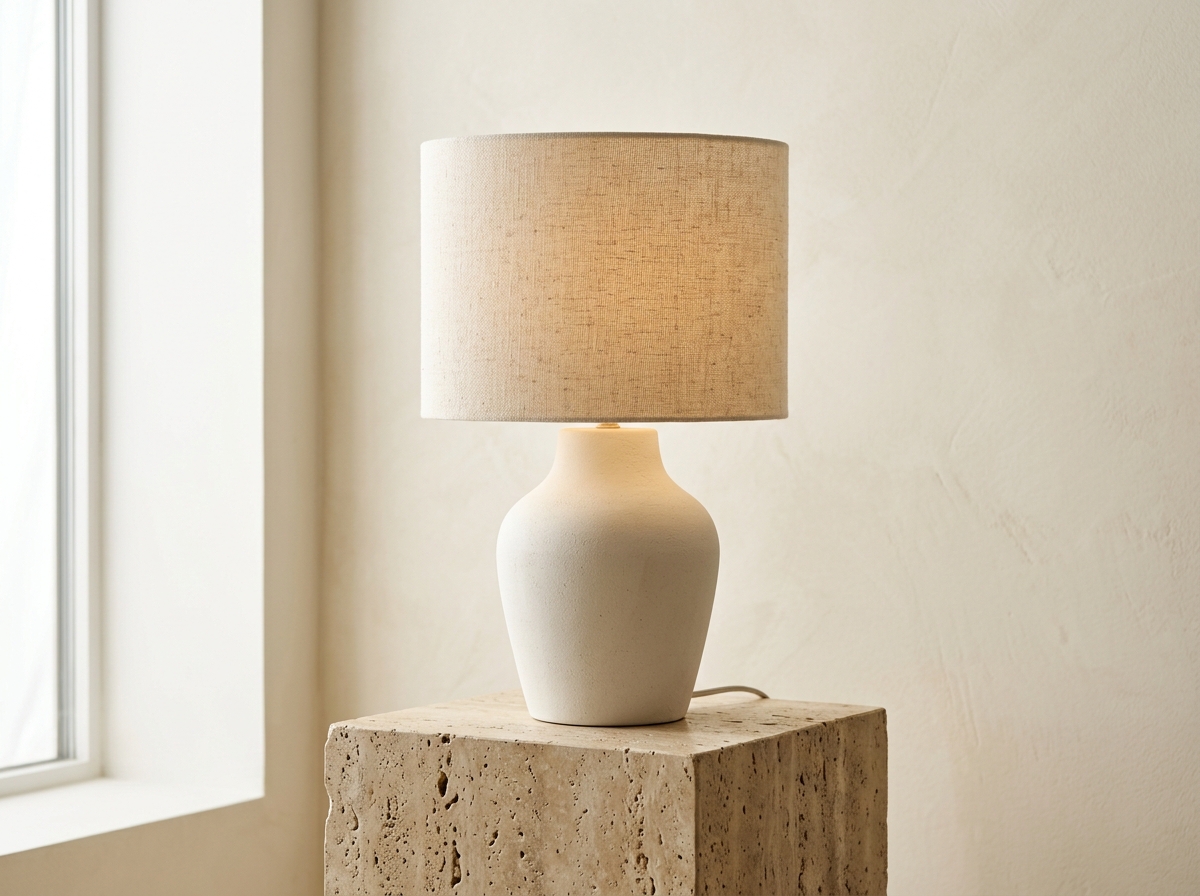
When darkness falls during European autumn and winter, illumination determines how you perceive the dimensions and emotional temperature of your interior. Too often, table lamps are chosen purely as decorative sculptures during daylight hours, only to prove harsh, blinding, or uncomfortably positioned once illuminated at dusk.
A thoughtful table lamp should function as both a sculptural presence when switched off and an intimate island of calm when turned on. Here are the core principles our studio follows when selecting and styling lamps for modern European spaces.
1. The Two-Thirds Proportion Rule
A lamp must sit comfortably within the proportions of the furniture piece beneath it. If a shade is too wide, it overpowers the credenza; if too narrow, the light fails to disperse evenly across the surface.
- Height Proportions: The overall height of the lamp should ideally not exceed 1.5 times the height of the bedside table or side cabinet it rests upon.
- Shade Diameter: The base diameter should roughly measure one-third of the shade width to maintain organic visual balance.
- Eye Level Horizon: When seated on a sofa or in bed, the bottom edge of the lamp shade should align roughly at eye level (around 95cm to 105cm from the floor) to prevent direct bulb glare.
“Light should never strike the eye directly. It should reveal the surfaces around it—the grain of oak, the grain of clay, the weave of linen.”
2. Shade Material: Why Natural Linen Excels
Synthetic polyester or hard plastic paper shades often produce a sterile, clinical light cone. In contrast, unbleached natural flax linen possesses organic slubs and microscopic fiber variations that gently refract light. As photons pass through natural flax, they absorb cold blue spectrums and cast a soothing, candle-like glow across surrounding walls.
3. The Significance of Kelvin (2700K vs 3000K)
In residential spaces, never install bulbs exceeding 2700K. For bedside reading and evening conversation, 2400K to 2700K mimics the natural spectrum of setting sunlight, signaling to your circadian rhythm that the day has concluded.