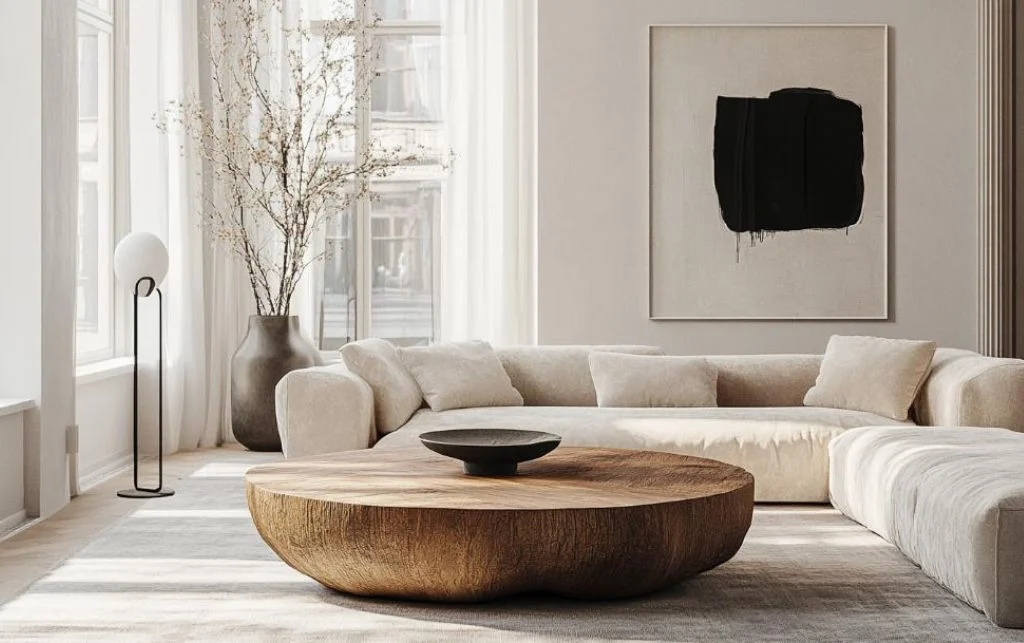
When entering a home, the living room delivers the immediate sensory impression of the space. Yet modern architecture often prioritizes polished, reflective surfaces—concrete screed floors, vast floor-to-ceiling glass, and crisp white plaster walls. While bright and airy, these surfaces can frequently leave a room feeling visually cool and acoustically sharp.
At Nestora, we believe comfort is rooted in the balance between Scandinavian clarity and Southern European warmth. Creating an inviting living space does not mean abandoning clean lines; it means choosing materials that invite human touch and absorb daily living with grace.
1. Establish Acoustic Calm Through Natural Textiles
One of the most overlooked aspects of warmth is sound. A room that echoes feels hollow and temporary, regardless of how attractive the furniture appears. Incorporating natural fiber textiles breaks harsh sound reverberations and softens the visual baseline of the room.
- Generous Wool Floor Coverings: Choose hand-knotted or flat-weave wool rugs that extend well beyond the front legs of sofas and armchairs.
- Pre-Washed Flax Linen: Heavy linen drapery and textured cushions add physical depth while absorbing high-frequency sound reflections.
- Feather-Filled Inserts: Plump, down-filled cushions conform gently to the body and maintain a soft, lived-in posture without rigid formality.
“A welcoming room invites you to sit down without asking permission. Its textures speak louder than any decorative ornament.”
2. Anchor the Room with Low-Profile Solid Wood
The eye naturally searches for grounding elements in an open living room. Synthetic laminates and thin metal frames often feel temporary. A low-profile coffee table crafted from solid European oak provides an organic anchor with visible grain patterns that mature with daily use.
Keep furniture heights deliberately low—between 32cm and 40cm for coffee tables. Lower seating horizons allow natural daylight to travel unimpeded across the room, creating an expansive yet grounded atmosphere typical of Scandinavian homes.
3. Discard the Single Ceiling Light
Relying solely on an overhead pendant light flattens the visual depth of a room and creates cold shadows under seating areas. Instead, approach your living room lighting as a three-dimensional landscape:
- Low Table Lamps: Positioned at eye level on credenzas and side tables (2700K warm bulbs) to create intimate seating alcoves.
- Wall Flush-Mounts: Bisque ceramic wall sconces that cast an indirect wash across textured walls.
- Soft Focal Points: A single sculptural ceramic lamp in an otherwise dark corner to draw the eye outward.