
Buying furniture online without seeing it? Learn how material details, spatial planning, and an in-home trial can support a confident decision.
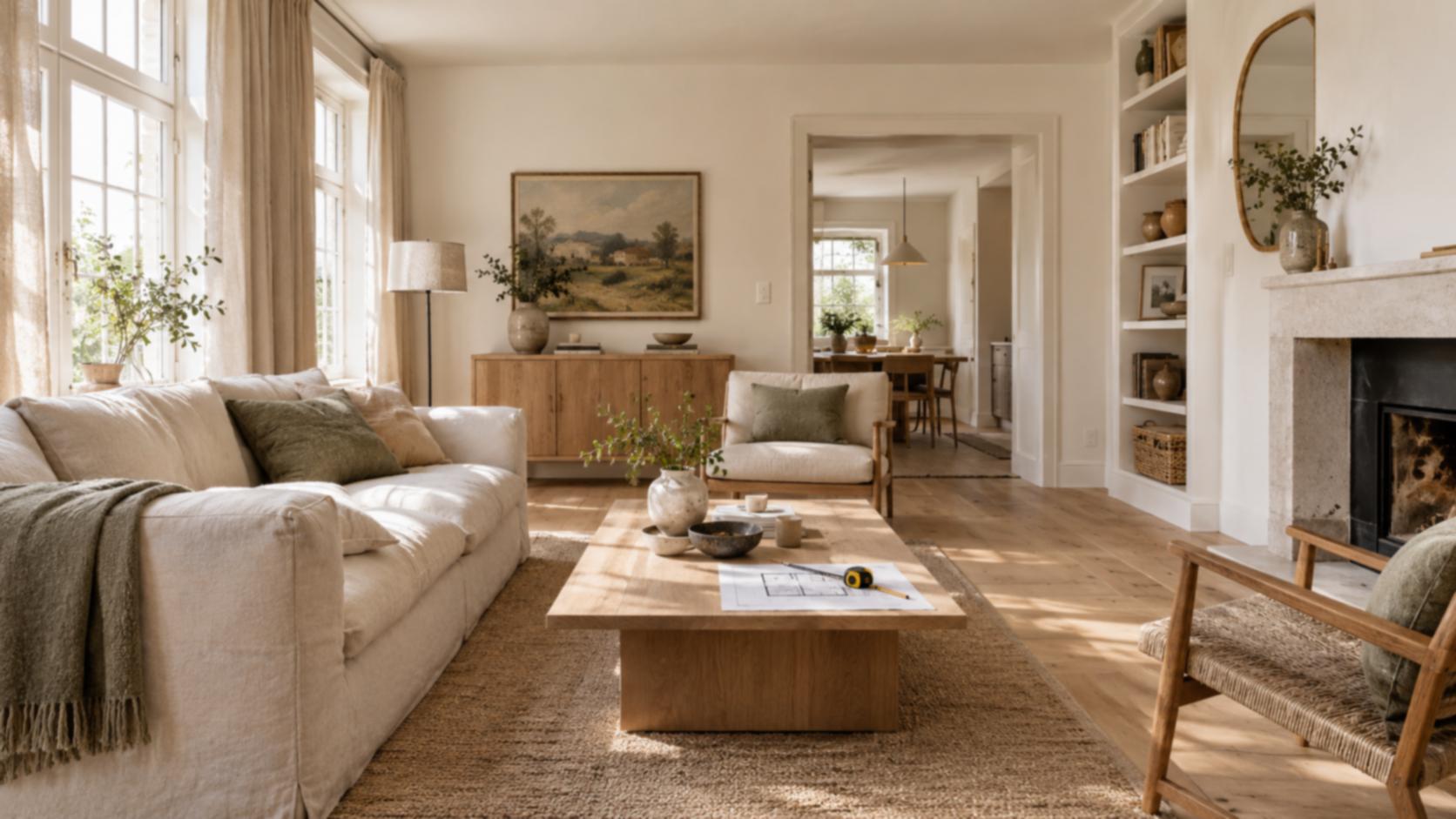
Buying furniture online without seeing it first asks for a different kind of confidence. A screen can convey silhouette, color, and proportion, but it cannot reproduce the quiet weight of solid wood, the softened hand of linen, or the way a piece settles into the daylight of a real room.
That hesitation is reasonable, especially when furnishing a home with pieces intended to remain for years. The answer is not to rush the decision. It is to replace the missing showroom visit with better evidence: transparent material information, thoughtful spatial planning, and time with the piece in the setting where it will actually live.
A considered home is not assembled at once; it is understood in layers of light, touch, and daily use.
For many furniture purchases, the gap between browsing and committing is real. First Chair’s furniture purchase decision data indicates that, while many consumers begin their search online, fewer than half complete the purchase there. Tactile and spatial uncertainty can make the final decision feel larger than the initial inspiration.
Here is how to turn that uncertainty into a more deliberate, informed process.
A product page is useful, but it is necessarily selective. Photography can show form and finish; it cannot tell you how a tabletop feels beneath a hand, whether an upholstered piece brings acoustic softness to a room, or how a natural surface changes as the day moves from morning light to evening shadow.
This becomes especially important with tactile materials. Solid oak has visual grain, density, and tonal variation. Unbleached linen carries a relaxed texture that changes the character of a seat or cushion. These are qualities to anticipate through careful product information, then assess in person rather than trying to resolve every question from an image.
The same is true when buying a sofa online without sitting on it. Dimensions, upholstery composition, construction details, delivery terms, and a meaningful trial policy provide the basis for a decision. The final measure, however, is whether the piece supports the way you actually sit, move, gather, and rest at home.
In rooms shaped by glass, concrete, or hard flooring, natural textures can also introduce visual and acoustic relief. A textile may help soften harsh reverberation, while warmer materials can counterbalance an austere visual atmosphere. Treat these effects as part of the furnishing decision, not as decorative afterthoughts.
A showroom offers a useful first impression, but it is not your home. Its ceiling height, floor area, artificial illumination, and styling may alter the perceived scale and color of a piece. A compact apartment, historic room, or open-plan living area has its own visual rhythm.
When possible, assess furniture where it will be used. This gives you the opportunity to observe how it meets your architecture rather than a retail setting.
Natural daylight reveals undertones that product photography may not fully capture. Place a sample or trial piece where it will normally sit and observe it at more than one time of day. Notice whether a wood finish reads warmer or cooler beside your existing floor, whether a textile holds its intended depth near a window, and whether the material remains calm under evening lamps.
Keep the wider composition in view. A low table or low seating arrangement can establish a quieter visual baseline, while a taller object can interrupt sightlines in a compact room. Our related guide on how low-profile furniture maximizes space in small living rooms explores how height and proportion influence the feeling of available space.
Furniture changes more than what a room looks like. Textiles, cushions, and layered surfaces can alter how a room sounds by absorbing some reflected sound. This is most apparent in spaces with hard floors, expansive glazing, or minimally furnished walls. Rather than assuming a material will solve an acoustic issue, live with it in the room and notice its contribution to the overall atmosphere.
Knowing how to check furniture quality before buying online begins with specificity. Broad language about craftsmanship or sustainability is less useful than clear information about materials, sourcing, finishes, dimensions, care requirements, and the conditions of delivery and return.
Before placing an order, look for the following:
Logistics also shape the experience of a premium purchase. Packaging should protect the piece while reflecting considered material choices, and delivery information should explain what to expect. At Nestora, we use 100% plastic-free logistics and packaging, with carbon-neutral EU shipping, so the delivery process aligns with the considered material values behind the collection.
Dimensions alone do not always answer the question of fit. A piece can technically fit within a room and still feel visually heavy, interrupt a natural route through the space, or sit at the wrong relationship to a window, rug, or existing seating.
This is where design consultation can make an online decision more precise. Bring room measurements, photographs, and a simple account of how the space is used. A considered conversation can help translate a digital product into an actual layout.
Focus the discussion on three practical questions:
Nestora design consultations are intended to support this early-stage assessment. They offer a way to discuss spatial layouts and proportional concerns before a piece is sent to your home, so the decision rests on more than a styled image.
The most useful response to the limitations of online shopping is time in the real setting. A furniture in-home trial allows a piece to move beyond first impressions. You can see it in changing light, use it during ordinary routines, and understand whether its scale and presence belong in the room.
During a trial, do not judge too quickly. Live with the piece through a few ordinary moments: a morning with clear daylight, an evening with ambient lighting, a quiet hour alone, or a gathering where circulation matters. Notice the questions that remain after the novelty has passed.
Use the period deliberately:
Nestora offers a 30-Day In-Home Trial because a lasting furnishing decision deserves domestic context. It gives you time to evaluate a piece within your own light, proportions, and routines before making the final commitment.
Buying premium furniture online should not require certainty from a photograph alone. Ask for transparent information, measure the room, consider its light and acoustics, and seek guidance where a layout needs closer attention. Then allow the physical setting to confirm the decision.
Explore the Nestora collection with the reassurance of the 30-Day In-Home Trial, or book a personalized design consultation to discuss your room’s layout, visual baseline, and circulation before you order.
