
Learn how to soften harsh lamp light with better shade diffusion, seated eye-level placement, and 2700K warm-dimming illumination.
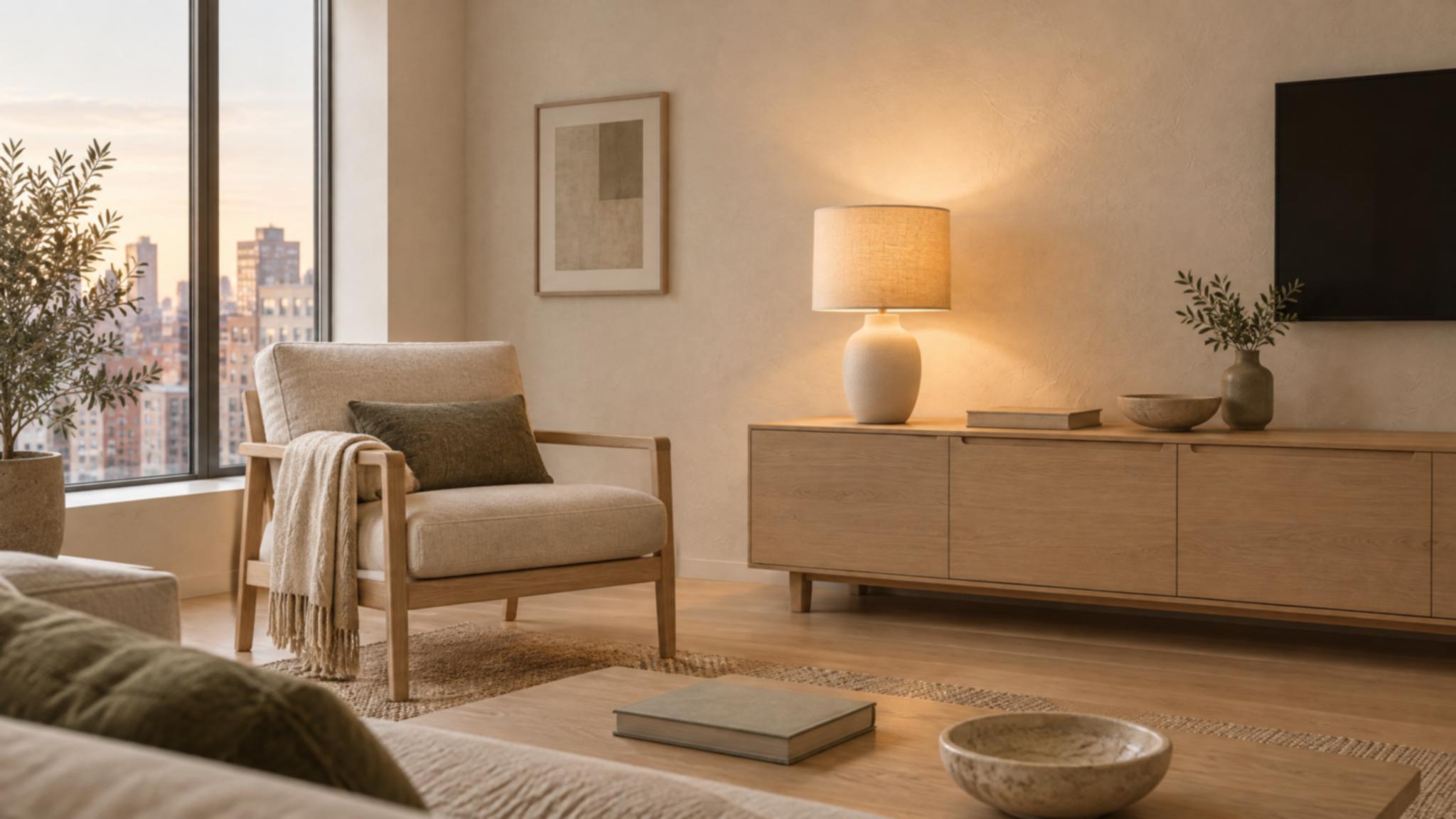
After a screen-heavy day, the transition into evening should feel quieter: lower contrast, gentler shadows, and light that supports conversation or a book without demanding attention. Yet a living room can remain visually tiring even after the laptop is closed. A bare bulb, an overly translucent shade, or a lamp positioned at the wrong height can place a bright point directly within the visual field.
Learning how to soften harsh lamp light is less about making a room dimmer and more about shaping light with intention. We can reduce direct glare, establish a calmer visual baseline, and preserve enough illumination for the rituals that make an evening feel restorative.
“A well-lit room does not announce its light; it lets the room be seen.”
Visual fatigue is not solely a screen issue. A bright or poorly shielded lamp can continue the same pattern of high contrast after work: the eye moves repeatedly between a darkened room and an intense light source. This may feel distracting, tense, or simply harder to settle into when reading, talking, or resting.
The American Academy of Ophthalmology notes that glare and excessive brightness in the surrounding environment can contribute to eye discomfort. That makes ambient lighting part of the wider evening environment, especially around seating and screens.
We should not treat a lamp merely as an object that produces brightness. In a considered interior, it establishes atmosphere. Its shade, height, bulb, and placement determine whether the glow feels composed or intrusive.
When asking, “Why is my lamp too bright?”, begin by identifying the kind of glare involved. Lowering bulb output may be useful, but it will not fully resolve a bulb that remains visible from the sofa or reflects sharply from a nearby surface.
Direct glare occurs when the bulb, or its brightest area, is in your line of sight. This is common with exposed bulbs, shallow shades, and lamps whose shade sits too high relative to a chair or sofa. The contrast between the bright source and its darker surroundings can make a room feel more forceful than its overall light level suggests.
Reflected glare appears when light strikes a glossy tabletop, framed artwork, television screen, or polished surface and sends a concentrated reflection toward the seating area. Repositioning a lamp by a small amount can often change this relationship.
Dimmers control intensity, which is valuable, but they do not change the geometry of an exposed light source. To reduce glare from table lamps, first conceal and filter the brightest part of the lamp; then fine-tune the output.
The best lamp shade material to diffuse light is one that balances transmission with visual shielding. A very sheer or thin shade can leave the bulb’s hot spot apparent, even when the lamp is technically covered. A denser woven textile interrupts that direct view and spreads the light across a broader surface.
Natural fibres can be particularly compelling in this role because their weave brings tactile variation to the light. Linen, for example, can soften LED output into a more graduated glow while retaining a warm, material presence during the day. The goal is not opacity for its own sake; an entirely blocked shade may leave the surrounding room underlit. Instead, look for a shade that conceals the bulb’s intensity while allowing the fabric itself to become the illuminated plane.
Organic materials also bring a quieter visual character. An unbleached textile and a tactile ceramic surface can add warmth without relying on cold, austere brightness as a design statement.
The most practical rule for ambient table lighting is simple: from the primary seated position, the bulb should be shielded by the shade. This is the shielding rule. It connects lamp design to the human scale of a room rather than to a shelf or table viewed while standing.
Measure from the floor to your eye line while seated, then assess where the lamp will sit. A shade that begins too high can reveal the bulb from below; one positioned poorly can send the brightest light directly across the visual field. The right height allows the shade to perform its essential task: placing a softly lit surface, rather than a bulb, in view.
A 42 cm table lamp can suit standard low credenzas, side tables, bedside surfaces, and reading nooks when its relationship to the chosen seat keeps the light source screened. The exact result depends on the furniture height and the seating posture, so observe the lamp in place before treating the arrangement as final.
Stability matters here as well. A lamp that shifts when its switch is used can gradually lose its intended alignment. A substantial base helps preserve the placement you have chosen, particularly on a bedside table or a low living-room surface.
Shade and height shape the light, while the bulb determines its character. For an evening setting, 2700K warm-white illumination offers a warmer visual tone than cooler white light. When paired with dimming, it gives the room a more flexible range: enough light for reading or conversation, then a lower, gentler level as the evening slows.
Choose an E27 bulb that is compatible with the lamp and, where relevant, with the existing dimming setup. Warm-dimming LEDs are a practical option for a lamp intended to move between functional and atmospheric use. Let the shade do the work of shielding and diffusion; let the dimmer refine the mood.
Audit the room from where you actually spend time in it. Sit down, switch each lamp on individually, and notice where the visual field catches on an exposed bulb, a glowing shade, or a sharp reflection. This small exercise can reveal why a space feels bright without feeling comfortable.
For a lamp designed around these principles, The Alder Table Lamp combines an unbleached 100% Belgian flax linen drum shade with a 42 cm overall height intended for seated eye-level placement. Its E27 fitting supports compatible 2700K warm-dimming LED bulbs, while its 2.4 kg weighted ceramic base is designed to remain stable on low credenzas and bedside tables.
Begin with the light you already have, then refine what interrupts the room’s calm. A well-shielded lamp, correctly placed and gently dimmed, can make an evening interior feel illuminated rather than exposed.
Take the next step: review the lamps nearest your sofa, reading chair, or bed, and consider whether The Alder Table Lamp suits the low-glare, warm-dimming arrangement you want to create.
